A new word or phrase from the Hans Wehr dictionary, every Wednesday.

Learning Arabic, one page at a time
A new word or phrase from the Hans Wehr dictionary, every Wednesday.

التَّدَرُّج
root: د-ر-ج / form V verbal noun / definition: gradual advance or progression
I’ve gone straight from floating to hitting the ground running. And between that landing and my approaching take-off, things have progressed unexpectedly quickly in the space of a week.
I could get used to this pace.
But Arabic’s form VI verbs remind me of the power contained in gradual progress and—I think—now is a good time to start explaining.
Continue reading “Form VI: Gradualness, Exchange, and Pretence”A new word or phrase from the Hans Wehr dictionary, every Wednesday.
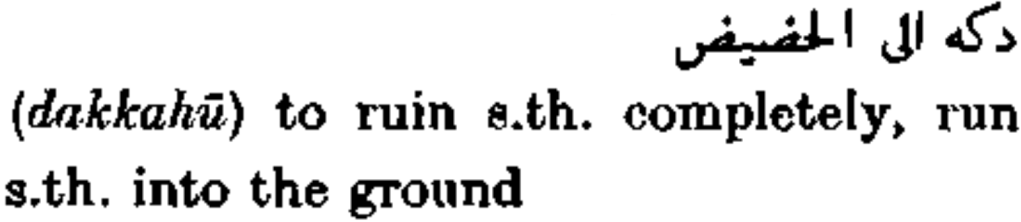

تَنْفيس
root: ن-ف-س / form II verbal noun / definition: catharsis
Someone told me yesterday that I seem to do a lot of work without much financial return. Exhibit A: this blog.
But this passion project doesn’t feel like work in any sense of the word. Except for the part where I spend hours planning and typing out content for the benefit of others. Hmm.
Yet it feels just as much—or even more so—something that I do for myself. Maybe it’s the catharsis, maybe the documentation of growth and learning, maybe the gratitude it evokes for being able to spend my time writing about the thing I love.
(But: if you do want to support the running of the blog, you can do so here!)
Continue reading “Arabic Prepositions: Common and Less So”A new word or phrase from the Hans Wehr dictionary, every Wednesday.


العَوْم
root: ع-و-م / form I verbal noun / definition: floating
I returned to London yesterday with my glasses broken, heart full, and mind a mess.
Those four weeks in Majorca, in my childhood home and bedroom with the sea-blue curtains I’ve had for the past twenty years, felt like too little time to honour the nostalgia.
On my last day, I sat on the balcony and wrote about my fear of my feet touching the ground. Something within me wants to keep running into unknowns or floating decisively between states, and my brain and words race each other in circles.
Continue reading “Four Weeks, and Three Arabic Phrases”A new word or phrase from the Hans Wehr dictionary, every Wednesday.


مُخَلِّص
root: خ-ل-ص / form II active participle / definition: saviour, Salvador
These days, I’ve been thinking a lot about Salvador—the diabetic former boxer who drove my mum and I to the airport two years ago. He was driving between motorway lanes whilst scrolling through photos on his phone to share with us and pulling miscellanea from different pockets of his swerving car.
We were close to certain we’d die on that car ride, so we surrendered to Salvador’s motto, something he kept repeating after telling us about each of the many traumas in his colourful life: c’est la vie.
“C’est la vie!”, we repeated after him, throwing our hands up, as if they were our last words.
Continue reading “Dictionary Finds: A Page of Woe”A new word or phrase from the Hans Wehr dictionary, every Wednesday.


مَعْز
root: م-ع-ز / collective noun / definition: goats
After six hundred posts and more than five years, I think I can graciously forgive if you have tired of my (written) voice at any point.
I’ve been planning to introduce some other voices, here and there, to the blog for quite some time. And thanks to the generous cooperation of the man who walked from Morocco to England, we’re finally able to kick off this new series: Journeys with Arabic.
For this series of posts, I’m asking other Arabic enthusiasts to share their own journeys with the language—so perhaps you and I can nab some insights and inspiration.
Continue reading “Journeys with Arabic: James Scanlan”A new word or phrase from the Hans Wehr dictionary, every Wednesday.
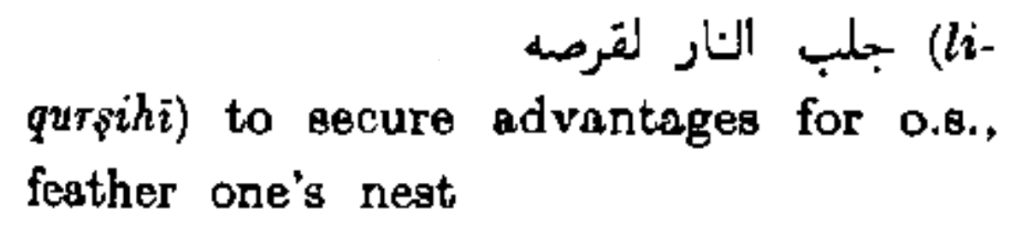

طُفولة
root: ط-ف-ل / noun / definition: childhood
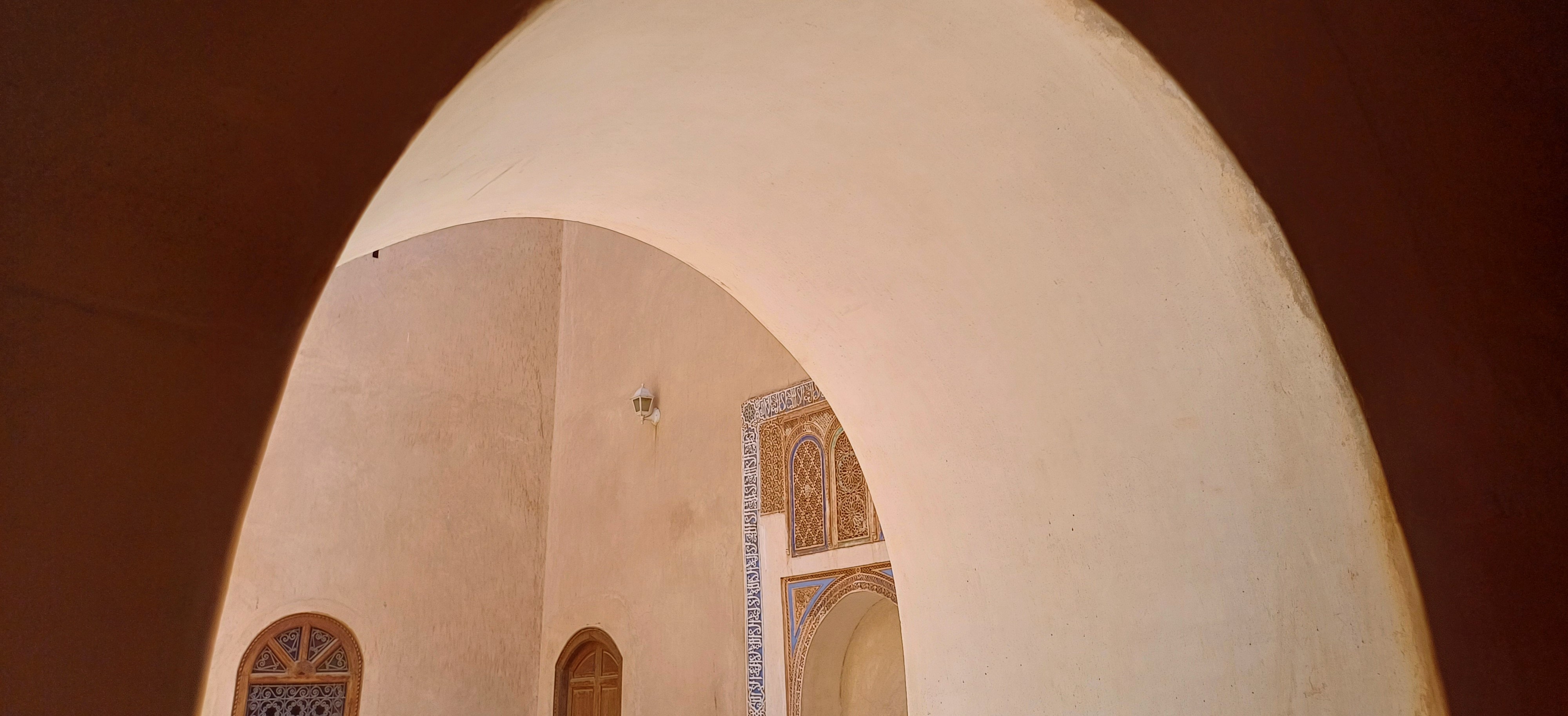
Isn’t it interesting how places from our childhood seem smaller when we revisit them?
Maybe it’s that we’ve grown physically—sure—and the space is narrower, relative to our bodies. But maybe it’s also our worldview that has expanded and, subsequently, made our past seem that little bit more limited.
Well, that’s just an afternoon reflection as I type from my childhood home in Majorca, a house without Wi-Fi in a small village that overlooks the sea and buzzes with the hums of crickets.
And whether it’s me or my worldview that has grown, this place embraces me tighter with each return.
Continue reading “Seven Arabic Passive Participles Meaning “Infatuated””A new word or phrase from the Hans Wehr dictionary, every Wednesday.


مَطار
root: ط-ي-ر / noun of place / plural: مَطارات / definition: airport
I’m writing this from a quiet(er) corner of Gatwick’s North Terminal after arriving four hours early, burdened with overstuffed cabin bags and guilt from having to throw away an unopened pint of milk before I left home.
Even after a sit-down matcha latte and yaki soba breakfast, I still have around three hours until my flight. And there’s nothing else to do but type. So here we are.
Continue reading “From an Airport, into the Blur”A new word or phrase from the Hans Wehr dictionary, every Wednesday.
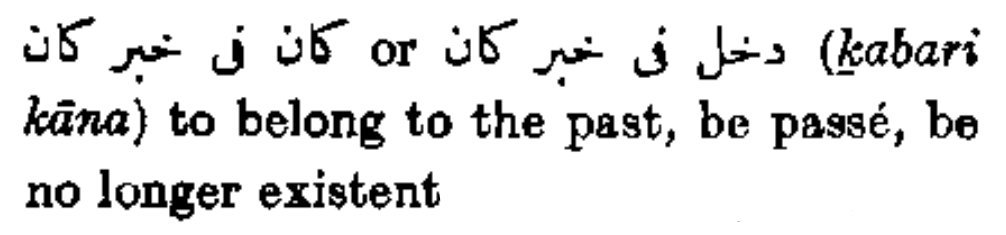
حُلْم
root: ح-ل-م / noun / plural: أَحْلام / definition: dream
A few nights ago, I had a series of vivid dreams—each storyline defined and profound in and of itself. And yet I couldn’t help but to try to tie those threads together in my fervent hunt for “greater meaning”.
I think that sums up a lot of my posts too: seeking greater meaning. And this one—the latest addition to the Exploring Time series—is no exception.
Today, we’re looking deep(er) into the past: الماضي.
Continue reading “Exploring Time in the Arabic Dictionary: “the Past””A new word or phrase from the Hans Wehr dictionary, every Wednesday.


غَضَب
root: غ-ض-ب / noun / definition: anger
My mind feels switched off today, and I think it’s because I poured out all of my thoughts into the other post. I talked about the word عدن, my PhD status upgrade, and my search for olive leaves to burn.
My friend said she liked that metaphor—about burning the olive leaves. I told her it was a tradition and not a metaphor, but I think the lines are blurred anyway.
But less about metaphors and more about synonyms, please.
Continue reading “Seven Phrases of Rage in Arabic”A new word or phrase from the Hans Wehr dictionary, every Wednesday.


إعادة
root: ع-و-د / form IV verbal noun / definition: return, re-
In the past few days, I reconnected with someone I haven’t seen in eleven years. And it made me reflect on the reasons why we return to our past—or why it returns to us.
And in terms of ideas, one theme I keep returning to (as you’ll have noticed in my posts) is that of the ocean.
I have some sort of spiritual and nostalgic connection with the water, and I can’t help but to linger over its linguistic connotations too. That’s why I’m returning to مُحيط.
Continue reading “Arabic Observations: Returning to مُحيط” The Arabic Pages