اِخْتِيار
root: خ-ي-ر / form VIII verbal noun / definition: choosing
I spent hours of the day yesterday—following a strong PhD-productive push in the morning—building a shelving unit that represents our latest bid to increase storage space in the home we already feel like we’re growing out of.
I, just to clarify, am a lover of smaller spaces. As long as those spaces breathe an air of minimalism, though. And in recent years, I’ve been slowly collecting things (art, artefacts, and so on) that have turned all available surfaces into what looks to be bazaar stalls.
Thus, we’re left with little choice but to try to squeeze more space out of what we have, or find a new place.
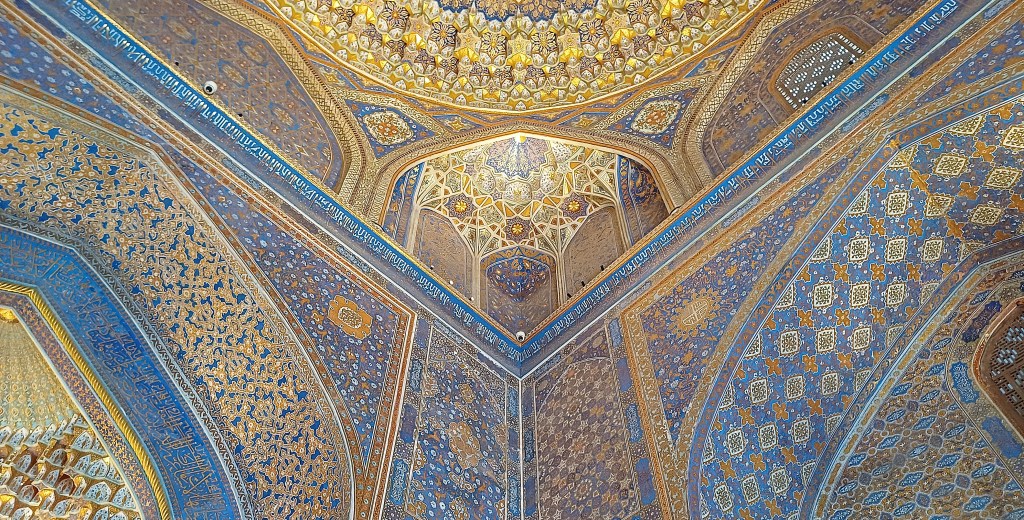
And after our return from Uzbekistan (where, of course, I bought more memories that need to be stored and/or displayed), I’ve really lost the motivation for house-hunting. So: more storage units for now.
On our trip, though, my husband—in his Levantine dialect—mentioned a word I’ve heard before in both Turkish and Arabic that has flowed back and forth between two regions. That word is خِتْيار.
You see, خِتيار in Levantine dialects is used to refer to an old person.
It entered the language, apparently, in the Ottoman era, from the Ottoman Turkish word ihtiyar, which carries the same meaning.
But it shouldn’t surprise that this Ottoman Turkish word itself was derived from Standard Arabic, from the form VIII verbal noun اِختِيار which means “to choose“.
So why did this verbal noun meaning “to choose” eventually become a regular noun meaning “an old person”?
Well, sources say that—in Ottoman times—the word ihtiyar came to be used for leaders (who tended to be older men) who had the power to make decisions (i.e. to choose).
(Note that the Arabic word for “leader” or “chief”, مُختار, also comes from the same root (خ-ي-ر).)
And over time, ihtiyar came to refer to any old person, as a form of respect. Thus, it came to mean “an old person”.
With the nature of the Ottoman Turkish language, and the linguistic influence of the Ottoman Empire, I’m sure many words have flowed and shifted from Standard Arabic, to Ottoman Turkish, then back to Arabic.
Do any others come to mind?
See you on my next post, إلى اللقاء!


If you’d like to receive email notifications whenever a new post is published on The Arabic Pages, enter your email below and click “Subscribe”:

