شَلّال
root: ش-ل-ل / noun / plural: شَلّالات / definition: waterfall
It’s been a beautifully busy long weekend. Beach walks, waterfalls, countryside drives—oh, and still stealing some minutes here and there to upload videos to my YouTube channel.
But it’s back to my laptop now and a return to the Dictionary Finds series…
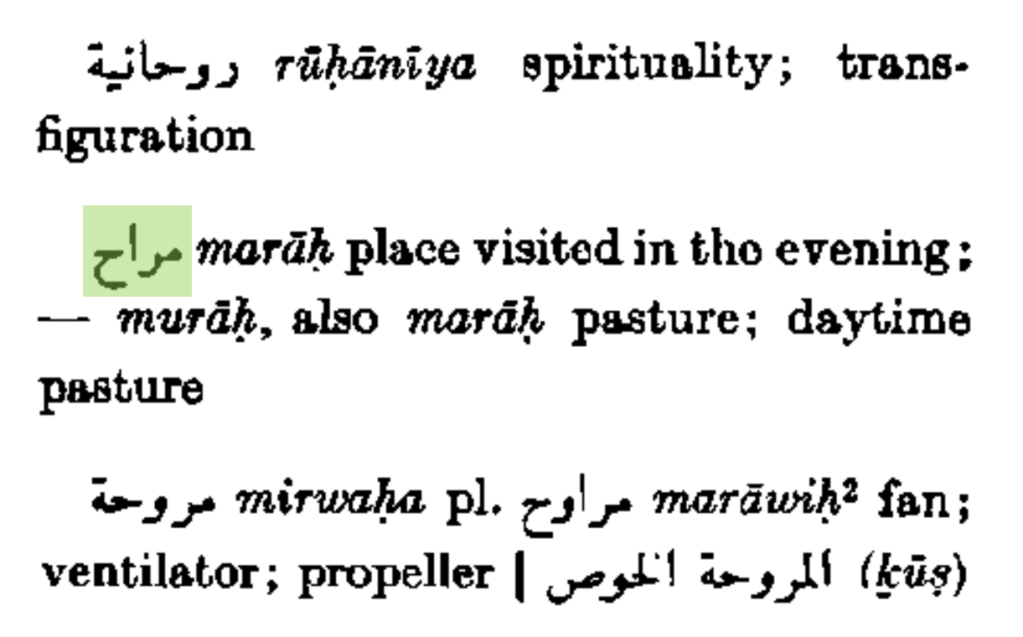
On page 424 of the Hans Wehr dictionary, nestled among other nouns under the root ر-و-ح, we encounter the word مراح:
We’ve talked about the hollow root ر-و-ح before. It’s related to rest, the soul, and the wind, and is associated with fate (read more about this).
Its form I verb, راحَ / يَروحُ, carries several meanings, including:
- to leave
- to go in the evening
- to begin
- to set out to do
Now: مَراح is an example of a place noun, as we can tell from its initial مَـ and the pattern it follows.
So, it makes sense—if we combine that form I verb meaning of “to go in the evening” with the place noun pattern—that مَراح means “place visited in the evening“, as the dictionary tells us.
But what’s interesting is the other definition of مَراح (also pronounced مُراح): “daytime pasture”.
My first thought was: is this another word we can add to our list of Words with Antonymic Meanings?
But is it really antonymic—i.e. مراح being a place visited during the daytime and the evening—or does it just reflect the wide net of meanings the verb casts?
Does مراح reflect the idea of setting out and beginning with the definition “daytime pasture”, and capture the idea of an evening trip with “place visited in the evening”?
And are “daytime” and “evening” even antonyms when “nighttime” also exists? Can times of the day even be antonyms when they’re in a cycle?
Great questions, I’d say. We’ll leave the answers to brew a little.
If you’re interested in how language and the times of day are intertwined, check out these two posts:
!مع السلامة

Need advice with Arabic? Book a consultation with me.


If you’d like to receive email notifications whenever a new post is published on The Arabic Pages, enter your email below and click “Subscribe”:
 The Arabic Pages
Your example of مراح reminded me of a less common expression: روح مرتاح وانت رايح. It means “go with peace of mind as you leave” and conveys reassurance, trust, and emotional calm. It is a way of wishing someone well, encouraging them to let go of their worries and move forward with confidence.