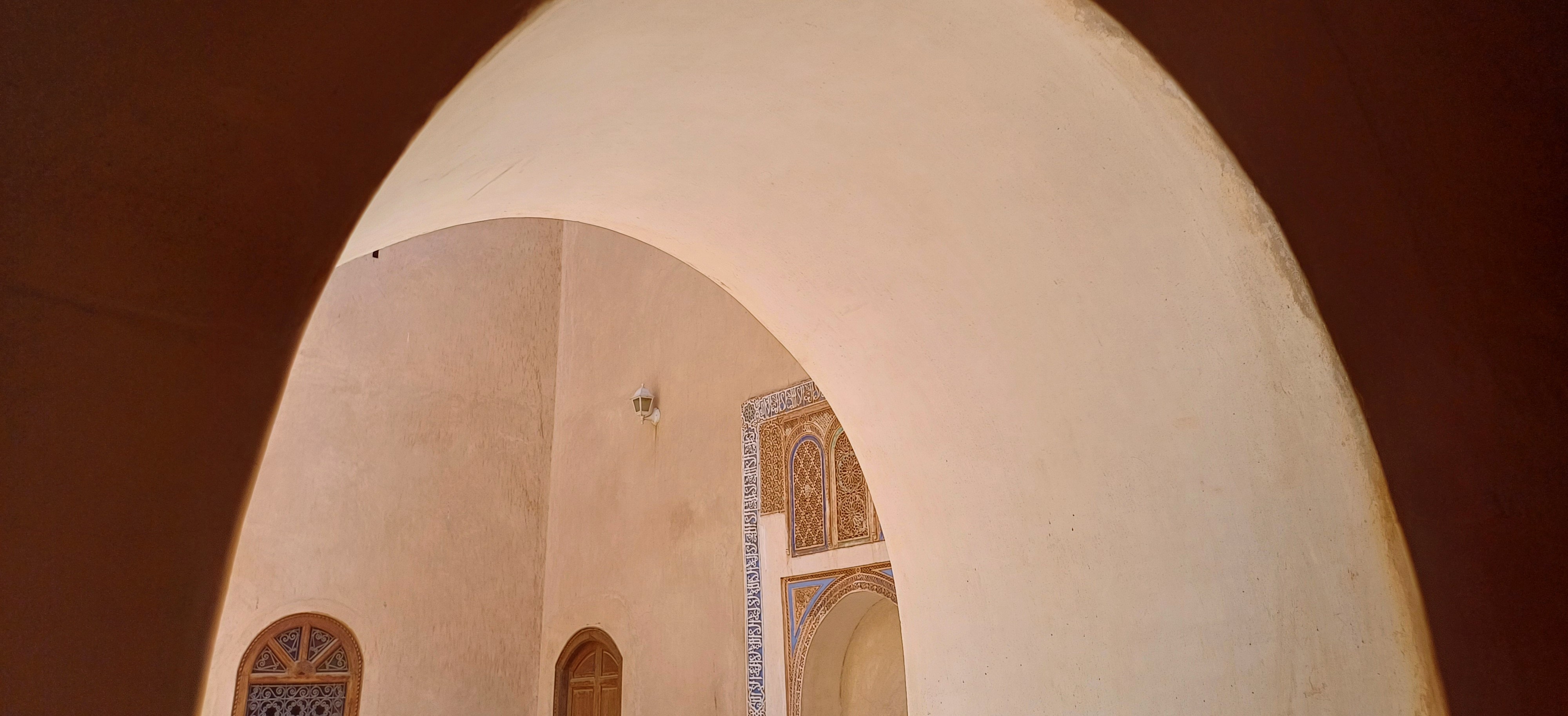
حُلْم
root: ح-ل-م / noun / plural: أَحْلام / definition: dream
A few nights ago, I had a series of vivid dreams—each storyline defined and profound in and of itself. And yet I couldn’t help but to try to tie those threads together in my fervent hunt for “greater meaning”.
I think that sums up a lot of my posts too: seeking greater meaning. And this one—the latest addition to the Exploring Time series—is no exception.
Today, we’re looking deep(er) into the past: الماضي.
ماضٍ
root: م-ض-ي
الماضي in its indefinite form is actually ماضٍ.
It’s a form I active participle from a defective root.
As we explored in another post, active participles from this type of root end in kasratayn when indefinite and ي when definite (for the most part).
The form I verb it derives from is مَضى / يَمضي which has a variety of meanings, including:
- to leave
- to elapse
- to advance or progress
- to continue
- to pursue
- to go deeper into something
- to bring something to an end
You might like to read Form I Defective Verbs: ا or و or ي or ى?
So, being that it’s the active participle of this verb, it follows that ماضٍ means:
- that which leaves and elapses
- that which advances, progresses, and continues on
- that which pursues
- that which goes deeper
- that which brings things to an end
All of these are interesting ways to think about the past.
The past is what leaves us. It’s what continues on after it has brought present realities to an end, and goes deeper into one dimension of time.
It’s as though it pursues some infinite distance, moving further and further towards it—accommodating more and more memories, trauma, and pangs of nostalgia as it does so.
Under ماضٍ in the dictionary, we also find the following meanings:
- sharp and cutting
- penetrative
- energetic
And isn’t it so?
Doesn’t the past move by (or through) us with cutting brutality and the energy of an unstoppable force?
Isn’t is something that permeates our understanding of the present, the future, and ourselves?
In my second-year PhD viva last week, the examiner asked how I can ensure that I’m not over-analysing in my research.
I gave a convincing academic answer, calling on the great Lakoff and Johnson and their psycholinguistic theory. I talked about my methodology and eliminating bias and contextualising sources.
But in reality, for me, over-analysing is the very joy of it. It’s a reflective process and a way to connect with words that may not be our own.
Maybe my analyses go too deep. But the depths are where all the beautiful things await.
!مع السلامة


If you’d like to receive email notifications whenever a new post is published on The Arabic Pages, enter your email below and click “Subscribe”:
 The Arabic Pages
One thought on “Exploring Time in the Arabic Dictionary: “the Past””