نِهائيّ
root: ن-ه-ي / nisba adjective / definition: final, definitive
It’s becoming a pattern in my life, I’ve noticed, that things end in winter. I can’t wait to bid farewell to this season of goodbyes, some of which have felt final.
What feels endless, on the other hand, is having my head buried in literature.
I’m in a trance-like state—turning pages, typing, pencilling, typing, pencilling…—and I’m not sure I’ve had an original thought in days.
Speaking of trances (sort of?), I had my first dream in Akkadian.
Well, more like the first instance of Akkadian appearing in my dreams: I was standing in front of a giant wall of inscriptions, and identified the cuneiform sign for šarrum (“king”).

I did wonder if there was a hidden meaning to this, or if the above is the only sign that has entered my subconscious thus far. I settled on the latter.
For more about Akkadian (and its similarities to Arabic)…
See:
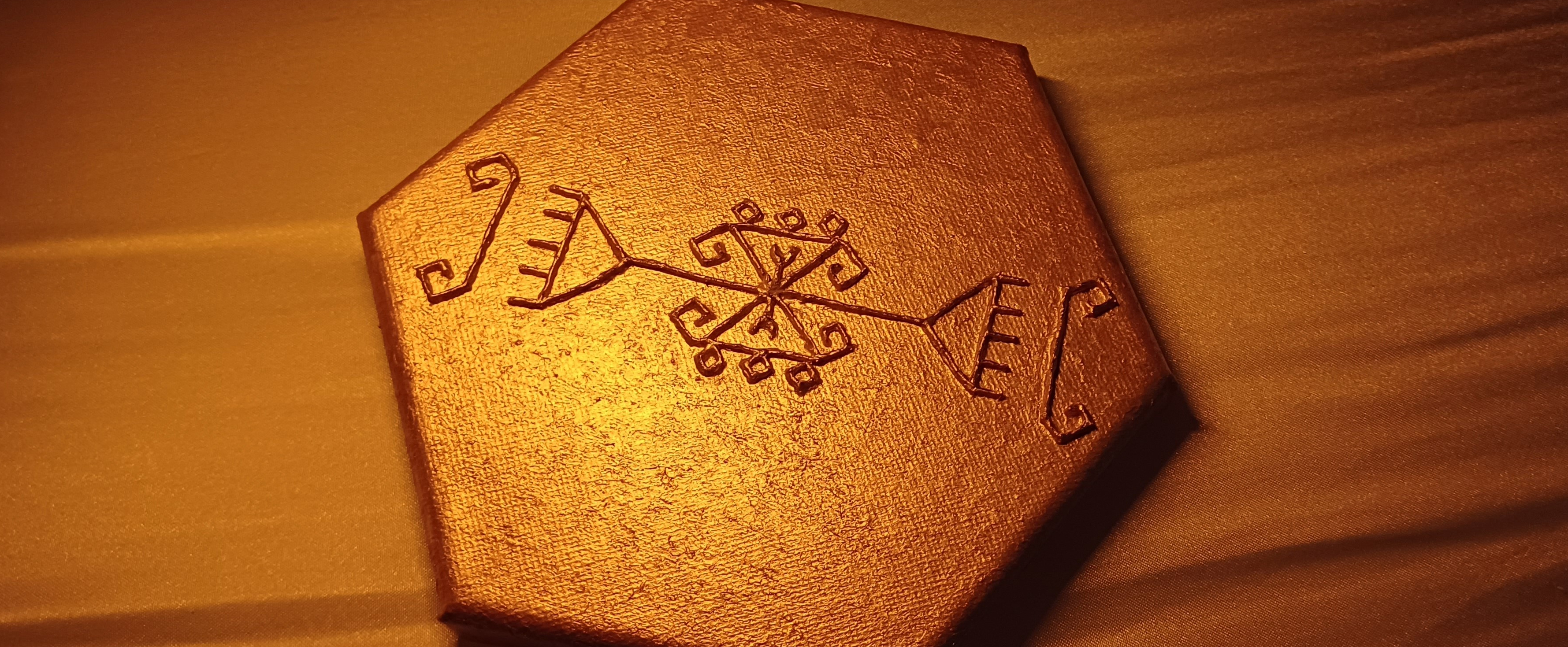
And whilst not actually dreaming, I’ve been daydreaming about a long, tech-free trip across Central Asia and painting my kilim-inspired designs (see the photo at the top!).
But I think that’s enough about me. You’re here for the Arabic.
We’ve looked at Laila al-Atrash’s novel ترانيم الغواية (Hymns of Temptation) before, in Step-by-Step Arabic Literature Translation #15, and we’re heading back into its pages for this post.
So here’s a random selection of words and phrases from the novel that I found interesting:
في مرمى النار

The noun مَرمًى is a place noun (see: The مَـ of Place and Time) from the root ر-م-ي. It means “aim” or “range”.
As a phrase, في مَرمى النار means “in the line of fire”—it can be used metaphorically too.
أمصار

أَمْصار is the broken plural of مِصر—no, not مصر as in “Egypt”, مصر as in “large city” or “metropolis”.
تدلهمّ

اِدلَهَمَّ / يَدلَهِمُّ is a form IV quadriliteral verb from the root د-ل-ه-م (which we dedicated an entire post to!).
It means “to be dark or gloomy”.
بياراتهم

بَيّارة (with its plural being بيّارات) means “orchard” or “grove”. Its particularly used in the Palestinian dialect, apparently.
طرف خيطها

طَرَف خَيط (literally: “the end of a thread”) can mean both “a lead” (in terms of an investigation of some sort) or “a loose end”. I like the imagery.
رمقتني

I added this verb here because it featured in the post Arabic Verbs for “to Look at” (Part 2)!
The form I رَمَقَ / يَرمُقُ means “to glance or look at”, whilst the form II رَمَّقَ / يُرَمِّقُ is a little more intense, meaning “to stare or gaze at”.
التفريط بـ

Here we have a form II verbal noun.
فَرَّطَ / يُفَرِّطُ / التَّفريط بِـ means “to renounce, waive, or give something up”.
We might see it followed by في instead of بِـ.
العرق دسّاس ولو من سابع جد

Ah, let’s end on a proverb: العِرق دَسّاس وَلَو مِن سابِع جَدّ.
It literally translates as “descent is a conspirator, even if it is from a great-great-great-(you get the idea)-grandfather”—it translates idiomatically into English as “blood will tell”!
That’s all for this post! What have you been reading lately?
.في أمان الله


If you’d like to receive email notifications whenever a new post is published on The Arabic Pages, enter your email below and click “Subscribe”:
 The Arabic Pages