
إطْلاق
root: ط-ل-ق / form IV verbal noun / definition: launch
I quietly launched The Arabic Pages shop a few days ago, with the first designs inspired by the uncommon Arabic word for “moonlessness” that we explored in Wehr Wednesdays #175.
(You might say it’s slightly ironic, then, that the design features an undeniably-present illustration of the moon… but I’d call it poetic juxtaposition… or something…)
Setting up shop was just one thing I’ve been doing this week—and perhaps it was a procrastination task more than a productivity one—but indulging in something creative helped me to lasso some unruly thoughts and take a calming breath before I swoop into a busy few weeks.
One of the other things I’ve been doing is reading for my PhD. And, as I predicted in Strangeness and a Summer of Reading (at least I’m self-aware), it’s taking me much longer than expected and I can’t seem to read a single line without pencilling in thoughts and mini analyses in the margins.
You sometimes suffer at the hands of an analytical mind.
Anyway, I thought it would make sense to add to the reading literature series by sharing a few interesting bits of vocabulary I came across reading Khalid Khalifa’s لا سكاكين في مطابخ هذه المدينة.
(Snippets from this novel also featured in Step-by-Step Arabic Literature Translation #10 and Reading Arabic Literature: An Interesting (?) Structure!)
The vocabulary below was taken from a random set of pages, near the beginning of the novel:
ترحّم على

تَرَحَّمَ / يَتَرَحَّمُ على is a form V verb, meaning “to ask for God’s mercy upon someone” or “to say to someone رَحِمَك الله (may Allah have mercy on you)”. The form II verb from the same root is identical in meaning.
You’ll notice that these verbs share a root with the noun رَحمة (“mercy”),
أسهب في

I liked this one.
أَسهَبَ / يُسهِبُ—a form IV verb—means “to speak at length or in detail”. Or, as I noted in pencil, “to go on about”.
Here, it’s followed by في مَديح, giving the sense of: “he praised (so-and-so) at great length” or “he went on and on praising (so-and-so)”.
In the dictionary, we find an adverb derived from the مصدر of أسهب / يُسهب which means “in detail, at length”: بِإسهاب.
تقاطروا
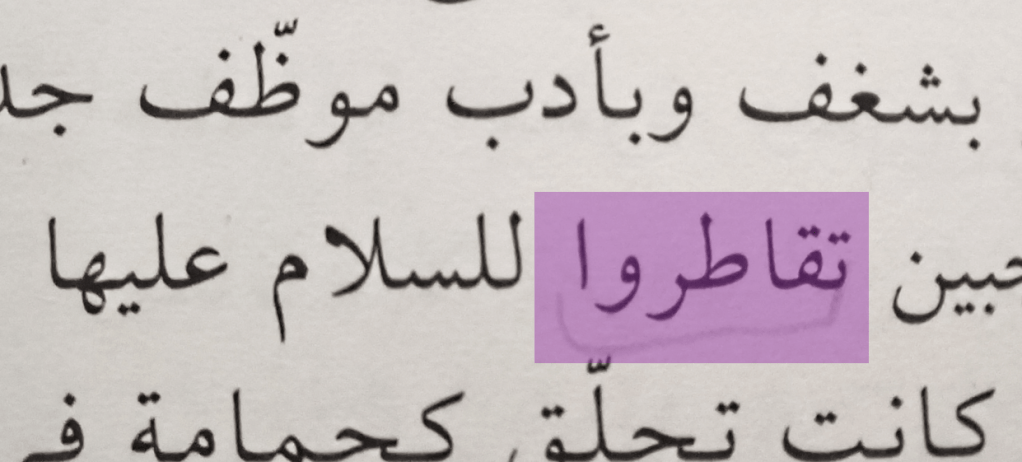
تَقاطَرَ / يَتَقاطَرُ is a form VI verb meaning “to flock” or “to throng (somewhere)”. تقاطروا is the past tense, third person masculine plural conjugation.
تقاطروا للسلام عليها gives the meaning of “they flocked to greet her”.
This reminded me that we looked at a phrase from the root ق-ط-ر in the post Reading Arabic Literature: Snippets From This Week: القاطرة دماً.
يقتنص فرصة
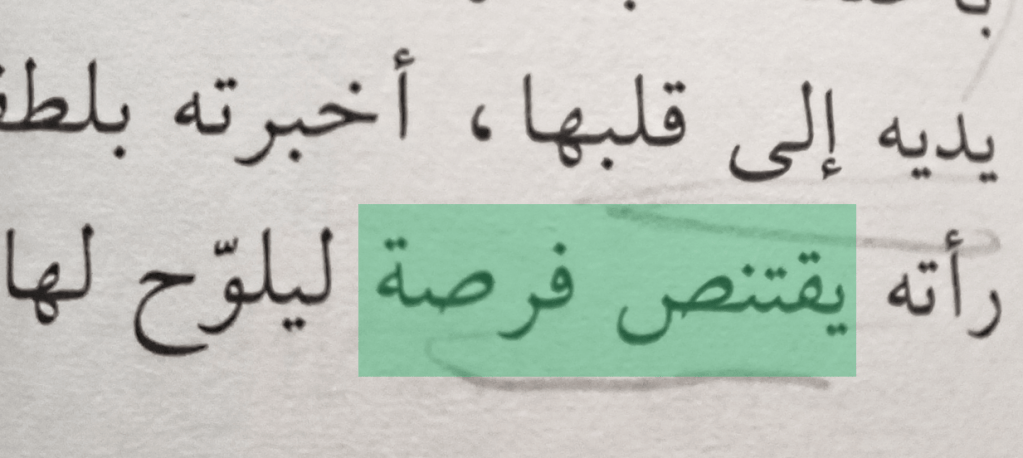
I was already familiar with the phrase يقتنص فرصة, meaning “to take advantage of an opportunity”, but I wanted to point out that it’s a synonym of the phrases we explored in Three Ways to Say “Seize the Opportunity” in Arabic!
اِقتَنَصَ / يَقتَنِصُ is a form VIII verb that, on its own, means either “to hunt” or “to take advantage or make use of”. (Thought: sometimes you have to hunt in order to create opportunities!)
تضرّجت وجنتاها

تَضَرَّجَ / يَتَضَرَّجُ is a form V verb which carries the meaning “to become red”. تضرّجت is the singular feminine past tense conjugation.
The subject is the following dual noun: وَجنَتاها, “her (two) cheeks”.
وَجنة = cheek
وَجنَتان = two cheeks, it’s مرفوع as it’s the subject of the verb
وَجنَتاها = her two cheeks (the ن from the dual ending drops when a possessive suffix is added, or when the dual noun is the non-final word in an إضافة structure)
Remember that the verb is not conjugated for the dual because when a verb precedes the subject, its conjugation is always singular.
تؤنبها
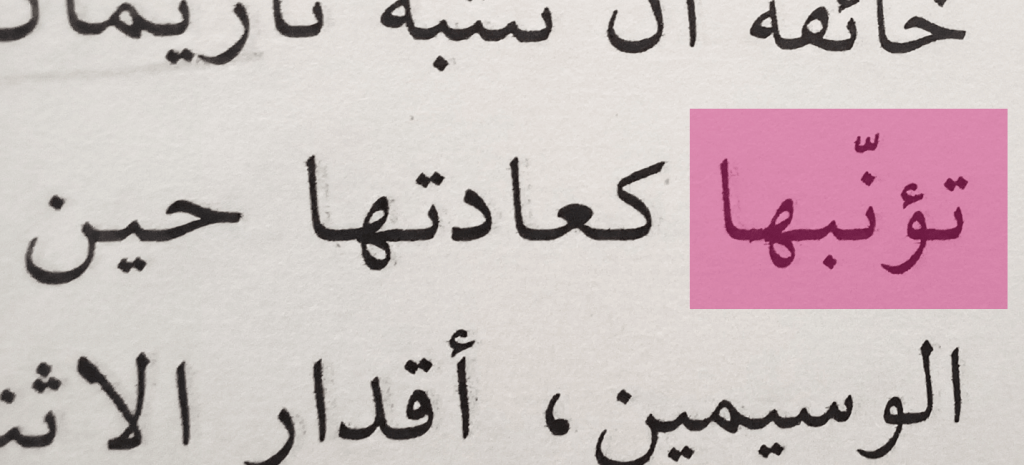
I’m sure this is one of those words I’ve looked up several times and the meaning just doesn’t seem to stick in my head. It helps when I think of its مصدر though, تأنيب.
So the form II verb أَنَّبَ / يُؤَنِّبُ, from the hamzated root ء-ن-ب, means “to blame or scold”. (Take a look at Seats of the Hamza (ء) for more on the hamza!)
Silly as it sounds, I just think of the word أَرنَب (“rabbit”) every time I see this word… Maybe now that I’ve documented its actual meaning here, it’ll stick.
So that’s just a little handful of vocabulary I wanted to share. Have you come across any words or phrases that caught your eye in your reading recently?
Before you go, don’t forget to check out the shop, and I’ll see you on my next post!
!إلى اللقاء
Follow The Arabic Pages on Instagram and Twitter, and find out how you can support this blog!
If you’d like to receive email notifications whenever a new post is published on The Arabic Pages, enter your email below and click “Subscribe”:
 The Arabic Pages