
جَهْد
root: ج-ه-د / noun / plural: جُهود / definition: effort, struggle
Procrastination is an odd thing. You see, I’ve been busy with the academic reading I need to get through in order to write my PhD literature review, but I’ve partially busied myself with that because reading the second novel I’m supposed to analyse has been a struggle.
And the struggle isn’t because of the language—I think I’m just finding it harder to connect with the story and characters, so I haven’t really got into a flow with it.
But finding interesting Arabic vocabulary is always a good motivation to keep reading.
So I’m adding to the reading literature series with a few words and phrases that caught my attention when I read the first half of Ahmed Saadawi’s فرانكشتاين في بغداد—and hopefully this will motivate me to pick up the novel again…
تلاسن
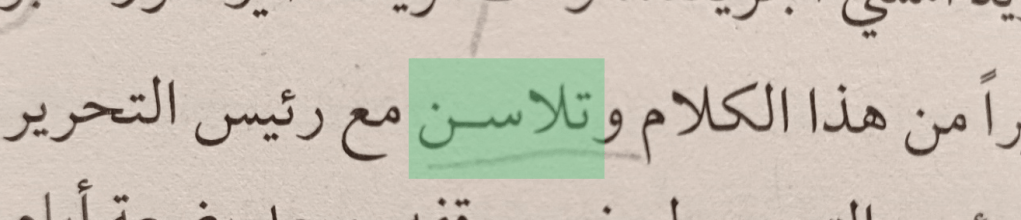
تَلاسَنَ / يَتَلاسَنُ is a form VI verb from the root ل-س-ن, the same root that لِسان (“tongue”) comes from.
Knowing that the meaning of form VI verbs is about exchange, and that لسان can also mean language, it makes sense that تلاسن means “to exchange words with, debate, or insult each other”.
حدث أن اكتشف

I added this one to the list because I thought it was interesting that the Arabic mirrors the English equivalent structure.
حَدَثَ أَنْ اِكتَشَفَ means “it happened that he discovered”. Notice that we have a past tense verb after أن in this context. Another context where we see أن followed by a past tense verb is in the phrase سبق أن.
لا يتورع عن
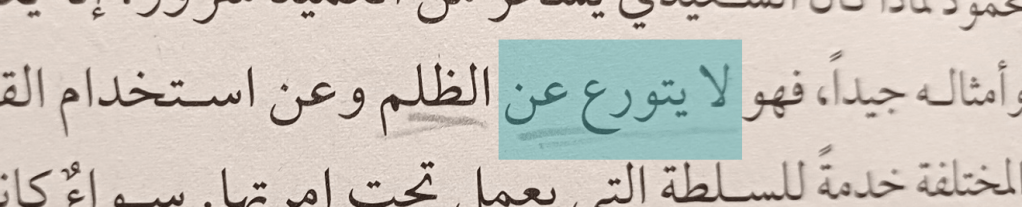
تَوَرَّعَ / يَتَوَرَّعُ عَن is a form V verb meaning “to hesitate about” or “to refrain from”.
So we could translate لا يتورع عن as “he won’t hesitate to” or “he doesn’t shy away from”.
بارع في

I feel like I keep seeing this noun. I’m sure I learnt it a few years ago to be honest, but I had to look it up at least once (probably closer to three times) when I came across it recently.
بارِع is a form I active participle (اسم فاعل) from the root ب-ر-ع. Coupled with the preposition في, it means “skilful in” or “capable of”
تسنى لـ

The form V verb تَسَنّى / يَتَسَنّى is from the defective root س-ن-و. It means “to be easy or possible (for, لِـ)”.
It’s another synonym we could have added to the post Six Ways to Say “Can” or “to be Able to” in Arabic.
مشدوهين
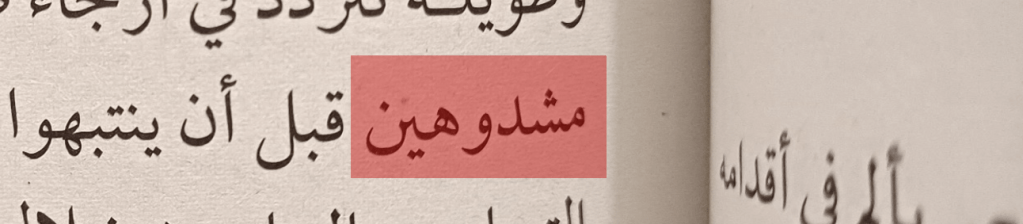
So this one is a form I passive participle (اسم مفعول) from the root ش-د-ه.
مَشدوه means “perplexed, baffled, or appalled”. It takes the sound masculine plural ending, so either ـونَ or ـينَ depending on its grammatical role in the context.
I start teaching again this week, so perhaps I should resume my reading of the novel on my commute.
And hopefully my energy levels will pick up because I’ve been feeling oddly sleepy since Sunday, when I got home and climbed straight into bed at 7pm.
Perhaps I’m getting old.
Perhaps it’s just procrastination.
.في أمان الله


If you’d like to receive email notifications whenever a new post is published on The Arabic Pages, enter your email below and click “Subscribe”:
 The Arabic Pages
I absolutely love reading blogs and your one has been one of the best finds. Jazaak Allah khair!
Glad to hear! وإياك 😄